Ship Recycling in Bangladesh: Sitakund, Steel Supply, Safety Challenges and the Green Transition
Bangladesh is one of the world’s leaders in the ship recycling industry. For decades, the country has been a primary destination for end-of-life vessels, playing a crucial role in the national economy while simultaneously facing significant environmental and labor challenges.
1. The Hub: Sitakund, Chattogram
The heart of the ship recycling industry in Bangladesh is located in Sitakund Upazila, roughly 14 kilometers north of the port city of Chattogram. Along a coastal stretch of approximately 14 kilometers, there are over 100 active shipbreaking yards. This region is often referred to as one of the world’s largest “graveyards” for ships, where massive cargo vessels, oil tankers, and other ocean-going ships are dismantled piece by piece.
Because of the concentration of industrial activity, Sitakund has become globally recognized as a major center for shipbreaking and ship recycling. The area forms part of Bangladesh’s broader maritime economy and remains directly linked to port operations, industrial steel production, and coastal employment.
2. Economic Importance
The ship recycling industry is a major contributor to Bangladesh’s economy for several reasons. The country has limited natural reserves of iron ore, which makes recycled steel from old ships especially valuable. Scrap metal recovered from dismantled vessels is processed in re-rolling mills and turned into rods, bars, and other materials used across construction and infrastructure projects.
- Raw material supply: The industry is widely known for supplying around half or more of Bangladesh’s steel demand, making it highly important to construction and industrial development.
- Employment: The sector directly employs tens of thousands of workers, while many more depend on indirect jobs in transport, re-rolling mills, repairs, scrap markets, and supply chains.
- Local industry and resale markets: Almost everything on a ship can be recycled, reused, or resold. Engines, generators, pumps, furniture, cables, electronics, kitchen equipment, and safety gear often enter local second-hand markets at comparatively affordable prices.
This means ship recycling is not only a dismantling activity — it is also part of a larger circular economy that supplies both industrial raw materials and reusable consumer goods across Bangladesh.
3. The Process: The “Beaching” Method
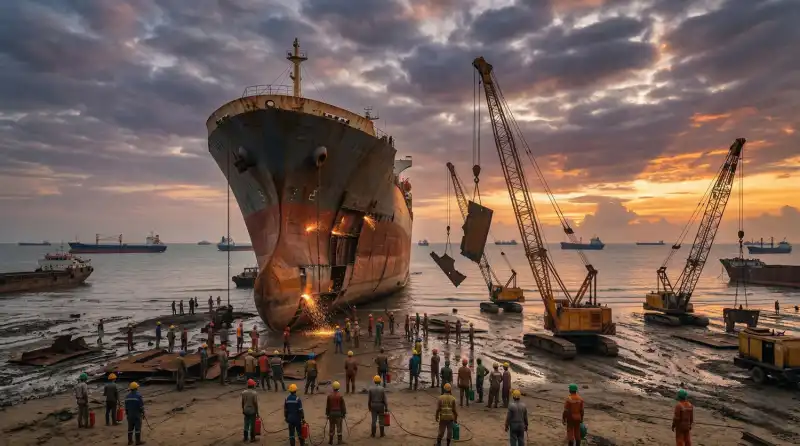
Unlike some developed countries where ships are dismantled in dry docks or alongside concrete quays, Bangladesh has historically relied on the “beaching” method. During high tide, a ship is driven at speed onto a flat tidal beach. Once the tide recedes, hundreds of workers move in to begin the dismantling process.
Workers cut the vessel into large sections using gas torches. Winches, cranes, and manual labor are then used to drag the steel plates and heavy machinery inland, where they are cut further and prepared for recycling or resale.
This method is preferred by many ship owners because it is cost-effective. However, it is also one of the most controversial aspects of the industry because it makes it much harder to safely contain pollutants such as oil residues, asbestos, toxic paint, sludge, and heavy metals on an open sandy coastline.
4. Challenges: Environment and Safety
For many years, ship recycling in Bangladesh was criticized for poor safety standards and serious environmental degradation. Older ships often contain hazardous materials such as asbestos, polychlorinated biphenyls (PCBs), lead-based paint, heavy metals, and residual fuel oil. Without proper containment systems, these toxic substances can enter seawater, beach soil, and nearby ecosystems.
The industry also developed a reputation for dangerous labor conditions. Workers have historically faced major risks, including falling steel plates, explosions from trapped gas in tanks, fires, crushing injuries, and long-term exposure to toxic fumes. Human rights and labor organizations have repeatedly described shipbreaking as one of the world’s dirtiest and most dangerous industries when it is not properly regulated.
Worker protection has therefore become one of the most important issues in the future of Bangladesh’s ship recycling sector. Protective equipment, training, medical access, safe accommodation, and strict operational control are all essential if the industry is to improve its global standing.
5. The Shift Toward “Green Ship Recycling”
In recent years, Bangladesh has faced increasing pressure from international bodies, global regulators, shipping companies, and the European market to reform its practices. This has led to a gradual shift toward what is often called “Green Ship Recycling.”
Bangladesh is linked to the global framework created by the International Maritime Organization’s Hong Kong International Convention for the Safe and Environmentally Sound Recycling of Ships. As part of the country’s reform effort, the government introduced the Bangladesh Ship Recycling Act 2018.
Many yards in Sitakund are now investing in:
- Concrete flooring to reduce soil contamination
- Hazardous waste management systems
- Improved drainage and pollution control
- Safer worker accommodation and facilities
- Training programs and better protective equipment
Several yards have also worked toward internationally recognized green compliance standards, allowing them to seek contracts from reputable ship owners who demand safer and environmentally sound ship recycling practices.
6. Conclusion: A Sector at a Crossroads
Ship recycling in Bangladesh remains an indispensable pillar of the national economy. It provides a critical source of raw materials, supports employment, and feeds an entire ecosystem of industrial and resale markets.
Yet the industry is clearly at a crossroads. The future of ship recycling in Bangladesh will depend on how successfully it can balance economic necessity with environmental responsibility, labor protection, and international credibility.
If legal reforms are enforced strictly and investment in safer technology continues, Bangladesh has the opportunity not only to remain one of the world’s largest ship recycling hubs, but also to become one of the most responsible and sustainable leaders in the sector.
Explore JAR Group’s Maritime Network
Bangladesh’s maritime economy is connected not only to ship recycling, but also to shipping agency services, vessel support, port operations, and crew management.
JAR WORLD SHIPPING LINE — shipping agency and maritime services.
JAR WORLD MARINE (PVT) LIMITED — maritime crew recruitment and workforce solutions.
About JAR Group | Contact
Related Maritime Reading
বাংলাদেশ বিশ্বে জাহাজ পুনর্ব্যবহার শিল্পের অন্যতম প্রধান দেশ। বহু দশক ধরে মেয়াদোত্তীর্ণ জাহাজ ভাঙার জন্য বাংলাদেশ একটি গুরুত্বপূর্ণ গন্তব্য। এই শিল্প দেশের অর্থনীতিতে বড় অবদান রাখে, তবে একই সঙ্গে পরিবেশ দূষণ ও শ্রমিক নিরাপত্তা নিয়ে দীর্ঘদিনের গুরুতর চ্যালেঞ্জও বহন করে।
১. কেন্দ্র: সীতাকুণ্ড, চট্টগ্রাম
বাংলাদেশের জাহাজ পুনর্ব্যবহার শিল্পের মূল কেন্দ্র হলো চট্টগ্রাম বন্দরের প্রায় ১৪ কিলোমিটার উত্তরে অবস্থিত সীতাকুণ্ড উপজেলা। প্রায় ১৪ কিলোমিটার দীর্ঘ উপকূলজুড়ে ১০০টিরও বেশি সক্রিয় জাহাজভাঙা ইয়ার্ড রয়েছে। এখানে বিশাল আকারের পুরনো জাহাজ টুকরো টুকরো করে ভেঙে ফেলা হয়।
এই বিশাল কার্যক্রমের কারণে সীতাকুণ্ডকে বিশ্বের বৃহত্তম জাহাজ ভাঙা বা জাহাজ পুনর্ব্যবহার কেন্দ্রগুলোর একটি হিসেবে দেখা হয়। এটি বাংলাদেশের সামুদ্রিক অর্থনীতি, শিল্প উৎপাদন এবং উপকূলীয় কর্মসংস্থানের সঙ্গে সরাসরি যুক্ত।
২. অর্থনৈতিক গুরুত্ব
জাহাজ পুনর্ব্যবহার শিল্প বাংলাদেশের অর্থনীতিতে বহু দিক থেকে গুরুত্বপূর্ণ। দেশে লৌহ আকরিকের প্রাকৃতিক মজুদ সীমিত হওয়ায় পুরনো জাহাজ থেকে পাওয়া স্ক্র্যাপ স্টিল অত্যন্ত মূল্যবান। এই ধাতু রি-রোলিং মিলে প্রক্রিয়াজাত হয়ে রড, বার এবং অন্যান্য নির্মাণসামগ্রীতে রূপান্তরিত হয়।
- কাঁচামাল সরবরাহ: এই শিল্প দেশের ইস্পাত চাহিদার বড় অংশ পূরণ করে।
- কর্মসংস্থান: হাজার হাজার শ্রমিক সরাসরি কাজ করেন, আর আরও বহু মানুষ পরিবহন, রি-রোলিং, মেরামত, স্ক্র্যাপ বাজার ও সরবরাহ ব্যবস্থায় পরোক্ষভাবে যুক্ত।
- দ্বিতীয় বাজার: ইঞ্জিন, জেনারেটর, পাম্প, আসবাব, বৈদ্যুতিক সরঞ্জাম, রান্নাঘরের জিনিসপত্রসহ জাহাজের বহু উপকরণ স্থানীয় বাজারে পুনরায় বিক্রি হয়।
তাই জাহাজ ভাঙা কেবল একটি শিল্প নয়, এটি পুনঃব্যবহারভিত্তিক একটি বৃহৎ অর্থনৈতিক চক্রের অংশ।
৩. “বিচিং” পদ্ধতি
উন্নত দেশগুলোর মতো ড্রাই ডক বা কংক্রিট অবকাঠামোতে জাহাজ ভাঙার পরিবর্তে বাংলাদেশ ঐতিহাসিকভাবে “বিচিং” পদ্ধতি ব্যবহার করে এসেছে। জোয়ারের সময় জাহাজকে সৈকতে তুলে আনা হয়। ভাটা নেমে গেলে শ্রমিকরা গ্যাস কাটার দিয়ে জাহাজের অংশ কেটে ফেলতে শুরু করেন।
এরপর উইঞ্চ, ক্রেন ও মানবশ্রমের মাধ্যমে ভারী ইস্পাত প্লেট ও যন্ত্রাংশ টেনে উপকূলে আনা হয় এবং আরও ছোট অংশে কাটা হয়।
পদ্ধতিটি তুলনামূলক কম খরচের হলেও খোলা বালুময় উপকূলে তেল, অ্যাসবেস্টস, বিষাক্ত রঙ, কাদা ও ভারী ধাতুর মতো দূষক নিরাপদভাবে নিয়ন্ত্রণ করা খুব কঠিন।
৪. পরিবেশ ও নিরাপত্তা চ্যালেঞ্জ
বহু বছর ধরে বাংলাদেশের জাহাজ পুনর্ব্যবহার শিল্প পরিবেশ দূষণ ও দুর্বল নিরাপত্তা মানের জন্য সমালোচিত হয়েছে। পুরনো জাহাজে অ্যাসবেস্টস, পিসিবি, সীসাযুক্ত রঙ, ভারী ধাতু এবং অবশিষ্ট জ্বালানি তেলের মতো বিপজ্জনক উপাদান থাকে। যথাযথ ব্যবস্থা না থাকলে এগুলো সমুদ্র, সৈকত ও আশেপাশের জীববৈচিত্র্যের ক্ষতি করতে পারে।
শ্রমিকদের জন্যও ঝুঁকি দীর্ঘদিনের। বিশাল ইস্পাত প্লেট পড়ে যাওয়া, ট্যাঙ্কে জমে থাকা গ্যাসের বিস্ফোরণ, অগ্নিকাণ্ড, চাপা পড়া, বিষাক্ত ধোঁয়ার সংস্পর্শ — এসব ঘটনা অতীতে বহুবার ঘটেছে। এই কারণেই জাহাজ ভাঙা বিশ্বে সবচেয়ে ঝুঁকিপূর্ণ শিল্পগুলোর একটি হিসেবে পরিচিতি পেয়েছে।
তাই শ্রমিক সুরক্ষা, প্রশিক্ষণ, সুরক্ষা সরঞ্জাম, চিকিৎসা সুবিধা ও নিরাপদ আবাসন এখন এই শিল্পের উন্নয়নের অন্যতম প্রধান শর্ত।
৫. “গ্রীন শিপ রিসাইক্লিং”-এর দিকে পরিবর্তন
সাম্প্রতিক বছরগুলোতে আন্তর্জাতিক সংস্থা, জাহাজমালিক, বৈশ্বিক নিয়ন্ত্রক কাঠামো এবং ইউরোপীয় বাজারের চাপে বাংলাদেশ এই শিল্পে সংস্কার শুরু করেছে। এর ফলেই ধীরে ধীরে “গ্রীন শিপ রিসাইক্লিং” ধারণা গুরুত্ব পাচ্ছে।
বাংলাদেশ আন্তর্জাতিক সামুদ্রিক সংস্থার Hong Kong International Convention for the Safe and Environmentally Sound Recycling of Ships-এর সঙ্গে সামঞ্জস্য রেখে এগোচ্ছে। এই প্রেক্ষাপটে সরকার Bangladesh Ship Recycling Act 2018 প্রণয়ন করেছে।
বর্তমানে অনেক ইয়ার্ড বিনিয়োগ করছে:
- কংক্রিট ফ্লোরিং
- বিপজ্জনক বর্জ্য ব্যবস্থাপনা
- ড্রেনেজ ও দূষণ নিয়ন্ত্রণ
- শ্রমিকদের উন্নত আবাসন
- প্রশিক্ষণ ও নিরাপত্তা সরঞ্জাম
কিছু ইয়ার্ড আন্তর্জাতিকভাবে স্বীকৃত “গ্রিন” মানদণ্ড পূরণের চেষ্টাও করছে, যাতে পরিবেশসম্মত ও নিরাপদ পুনর্ব্যবহার চায় এমন জাহাজমালিকদের কাছ থেকে কাজ পাওয়া যায়।
৬. উপসংহার: পরিবর্তনের সন্ধিক্ষণে একটি শিল্প
বাংলাদেশের জন্য জাহাজ পুনর্ব্যবহার শিল্প এখনো অত্যন্ত গুরুত্বপূর্ণ। এটি কাঁচামাল সরবরাহ করে, কর্মসংস্থান সৃষ্টি করে এবং পুনঃব্যবহারভিত্তিক অর্থনীতিকে শক্তিশালী করে।
তবে এই শিল্প এখন একটি গুরুত্বপূর্ণ মোড়ে দাঁড়িয়ে আছে। ভবিষ্যতে এর সাফল্য নির্ভর করবে অর্থনৈতিক প্রয়োজনের সঙ্গে পরিবেশ রক্ষা, শ্রমিক সুরক্ষা এবং আন্তর্জাতিক গ্রহণযোগ্যতার ভারসাম্য কতটা সফলভাবে রক্ষা করা যায় তার ওপর।
যদি আইন কঠোরভাবে বাস্তবায়ন হয় এবং নিরাপদ প্রযুক্তিতে বিনিয়োগ অব্যাহত থাকে, তবে বাংলাদেশ শুধু জাহাজ পুনর্ব্যবহারে বিশ্বনেতাই নয়, বরং আরও দায়িত্বশীল ও টেকসই শিল্পব্যবস্থার উদাহরণও হতে পারে।
تُعد بنغلاديش واحدة من الدول الرائدة عالميًا في صناعة إعادة تدوير السفن. وعلى مدى عقود، كانت وجهة رئيسية للسفن التي انتهى عمرها التشغيلي، حيث أسهمت هذه الصناعة في الاقتصاد الوطني بشكل كبير، لكنها واجهت في الوقت نفسه تحديات بيئية وعمالية خطيرة.
يتمركز هذا القطاع في سيتاكوند قرب تشاتوغرام، حيث تنتشر ساحات تفكيك السفن على امتداد الساحل. وتوفر هذه الصناعة الفولاذ والمواد القابلة لإعادة الاستخدام، كما تدعم فرص العمل والأنشطة الصناعية المحلية.
وتعتمد بنغلاديش تقليديًا على طريقة “إرساء السفينة على الشاطئ”، وهي طريقة منخفضة التكلفة لكنها تجعل التحكم في الملوثات مثل الزيوت والأسبستوس والمعادن الثقيلة أكثر صعوبة.
ولهذا السبب، تعرضت الصناعة لانتقادات كبيرة بسبب المخاطر البيئية وسلامة العمال. إلا أن السنوات الأخيرة شهدت توجهًا متزايدًا نحو “إعادة التدوير الأخضر للسفن” من خلال إصلاحات قانونية وتحديث الساحات وتحسين معايير السلامة.
ويقف هذا القطاع اليوم عند نقطة تحول مهمة: فإما أن يظل قطاعًا اقتصاديًا مهمًا مع تحديات مزمنة، أو يتحول إلى نموذج أكثر أمانًا ومسؤولية واستدامة على المستوى العالمي.
孟加拉国是全球船舶回收行业的重要国家之一。几十年来,孟加拉国一直是报废船舶的主要目的地,这一行业在国家经济中发挥了重要作用,同时也长期面临环境污染和劳工安全方面的严重挑战。
该行业的核心位于吉大港附近的锡塔昆达。沿海地区分布着大量拆船厂,负责将大型旧船拆解成钢材、机械设备和其他可再利用材料。
由于孟加拉国铁矿资源有限,拆船所得废钢对建筑和工业发展非常重要。但传统的“冲滩拆船”方式虽然成本较低,却难以有效控制油污、石棉和重金属等污染物。
近年来,孟加拉国正逐步推动“绿色拆船”转型,通过法律改革、设施升级、废物管理和工人安全改进,使这一行业朝着更环保、更安全和更符合国际标准的方向发展。
这一行业如今正站在关键的十字路口:未来能否继续保持全球领先地位,将取决于经济利益、环境保护和劳工安全之间的平衡。
बांग्लादेश दुनिया के प्रमुख जहाज़ पुनर्चक्रण देशों में से एक है। कई दशकों से यह देश पुराने और सेवा-समाप्त जहाज़ों के लिए एक महत्वपूर्ण गंतव्य रहा है। इस उद्योग ने राष्ट्रीय अर्थव्यवस्था में बड़ा योगदान दिया है, लेकिन इसके साथ पर्यावरणीय और श्रमिक सुरक्षा संबंधी गंभीर चुनौतियाँ भी जुड़ी रही हैं।
इस उद्योग का मुख्य केंद्र चट्टोग्राम के पास स्थित सिताकुंड है। यहाँ लंबे तटीय क्षेत्र में अनेक जहाज़ तोड़ने वाले यार्ड विकसित हुए हैं, जहाँ से इस्पात, मशीनरी और अन्य पुनः उपयोग योग्य सामग्री प्राप्त होती है।
बांग्लादेश में पारंपरिक रूप से “बीचिंग” पद्धति का उपयोग किया गया है, जिसमें जहाज़ को ज्वार के समय तट पर चढ़ाया जाता है। यह पद्धति कम लागत वाली है, लेकिन इससे तेल, एस्बेस्टस और भारी धातुओं जैसे प्रदूषकों को नियंत्रित करना कठिन हो जाता है।
इसी कारण इस उद्योग को लंबे समय तक पर्यावरणीय क्षति और श्रमिकों की सुरक्षा को लेकर आलोचना झेलनी पड़ी। अब बांग्लादेश “ग्रीन शिप रीसाइक्लिंग” की दिशा में आगे बढ़ रहा है, जिसमें नए कानून, बेहतर अवसंरचना और अधिक सुरक्षित कार्य प्रणाली शामिल हैं।
यह उद्योग अब एक महत्वपूर्ण मोड़ पर है। भविष्य में इसकी सफलता इस बात पर निर्भर करेगी कि बांग्लादेश आर्थिक महत्व, पर्यावरण संरक्षण और श्रमिक सुरक्षा के बीच संतुलन कितनी सफलतापूर्वक बना पाता है।