
Severe Drought Hits Kulaura Tea Gardens, Raising Fears of Sharp Production Decline
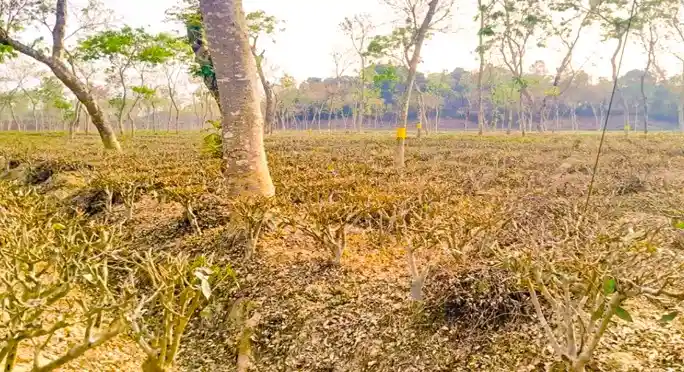
Tea gardens in Kulaura, under Moulvibazar’s tea belt, are facing an alarming drought situation after nearly five months without rainfall. Estate managers say the prolonged dryness is burning tea plants, disrupting new growth, and threatening a major fall in production this season.
Field-level reports indicate that all 26 tea gardens in the Kulaura area have been affected. Both young and mature tea plants are under pressure from intense sunlight and unusually dry soil conditions. Canals and internal water channels inside the gardens have dried up, making irrigation and spray-based rescue efforts increasingly difficult.
Since tea cultivation in the region depends heavily on seasonal rain, the absence of moisture has sharply reduced fresh bud formation. In several estates, management officials estimate that around 25 to 30 percent of tea plants have already been damaged by heat stress and drought.
Production at Risk Across Major Estates
At Gazipur Tea Garden, Deputy General Manager Joyonto Dhar said the estate has tea planted across approximately 1,645 acres. According to him, nearly 30 percent of the cultivated area has suffered from severe sun scorch and drought stress. Last year, the garden produced about 1,172,300 kilograms of black tea, but that level now appears difficult to maintain under the current weather conditions.
At Dildarpur-Cliveden Tea Garden, Deputy General Manager Zainal Abedin warned that newly planted tea sections are especially vulnerable. He said harsh sunlight is burning young plants rapidly, while older bushes are also showing signs of serious stress. The estate estimates that around 10 percent of its tea plants have already been affected.
Similar concerns were echoed at Lohaiuni-Halichhara Tea Garden, where management says the long dry spell has severely affected irrigation systems because internal streams and channels are drying up. With plucking yet to begin properly, the estate fears it will fall far behind in output if rain does not arrive soon.
Diseases May Add to the Crisis
Beyond the immediate effect of heat, tea estates are also reporting the emergence of various plant diseases linked to drought stress. When tea bushes weaken, they become more vulnerable to pests, leaf damage, and reduced recovery capacity. This means the crisis is not limited to one month’s harvest; it may also affect the health and productivity of the bushes over a longer period.
Managers say that if the dry conditions extend deeper into Chaitra, the damage could become more prolonged and expensive to reverse. Lower yields, higher maintenance costs, and extra care for replanting or recovery may place significant pressure on estate operations.
Tea Industry Analysis
The drought in Kulaura is more than a local weather story. It highlights a broader vulnerability inside rain-dependent tea production systems in Bangladesh.
- Early-season loss: If the first flush is delayed or weakened, the entire production curve for the year may suffer.
- Young plant vulnerability: Newly planted sections often lack deep root strength, making them more exposed to heat stress.
- Irrigation pressure: Dry internal canals reduce emergency response capacity for estates trying to save stressed plants.
- Disease risk: Drought-weakened bushes can become more susceptible to leaf diseases and long-term productivity decline.
- Market effect: Lower output from affected estates could eventually influence supply stability, input costs, and quality consistency.
For Bangladesh’s tea sector, this moment is a reminder that weather variability is becoming a serious operational challenge. Estate resilience will increasingly depend on water management, soil care, shade planning, and the ability to respond quickly during extreme dry spells.
JAR TEA — Every Cup Has a Story
From heritage, care, and the culture of tea to the future of quality and trust — JAR TEA believes every cup should carry comfort, character, and meaning.
Visit JAR TEAভয়াবহ খরায় কুলাউড়ার চা-বাগান, উৎপাদনে বড় ধসের আশঙ্কা
মৌলভীবাজারের কুলাউড়ার চা-বলয়ে টানা প্রায় পাঁচ মাস বৃষ্টি না হওয়ায় ভয়াবহ খরার পরিস্থিতি তৈরি হয়েছে। বাগান কর্তৃপক্ষের ভাষ্য, দীর্ঘ শুষ্কতা, তীব্র রোদ ও মাটির আর্দ্রতা কমে যাওয়ায় চা-গাছ পুড়ে যাচ্ছে, নতুন কুঁড়ি বের হচ্ছে না, আর চলতি মৌসুমে উৎপাদনে বড় ধস নামার আশঙ্কা দেখা দিয়েছে।
সরেজমিন তথ্য অনুযায়ী, কুলাউড়া অঞ্চলের ২৬টি চা-বাগানই এই খরার প্রভাবে ক্ষতিগ্রস্ত হয়েছে। নতুন ও পুরোনো—দুই ধরনের চা-গাছই প্রচণ্ড রোদ, শুকনো মাটি এবং পানির সংকটে চাপে রয়েছে। বাগানের ভেতরের খাল-নালা ও ছোট পানি প্রবাহ শুকিয়ে যাওয়ায় সেচ ও স্প্রে-নির্ভর রক্ষামূলক ব্যবস্থা নেওয়াও কঠিন হয়ে পড়েছে।
এই অঞ্চলের চা উৎপাদন অনেকটাই মৌসুমি বৃষ্টির ওপর নির্ভরশীল। কিন্তু নভেম্বর থেকে মার্চ পর্যন্ত কার্যত বৃষ্টিপাত না থাকায় গাছে নতুন কুঁড়ি আসা কমে গেছে। কয়েকটি বাগানের হিসাবে, ২৫ থেকে ৩০ শতাংশ পর্যন্ত চা-গাছ ইতোমধ্যে খরা ও তাপদাহে ক্ষতিগ্রস্ত হয়েছে।
বড় বাগানগুলোতেই উৎপাদনের চাপ
গাজীপুর চা-বাগানের উপমহাব্যবস্থাপক জয়ন্ত ধর জানান, তাদের বাগানে প্রায় ১,৬৪৫ একর জমিতে চা চাষ করা হয়েছে। তার মতে, চাষকৃত এলাকার প্রায় ৩০ শতাংশ তীব্র রোদ ও খরার চাপে ক্ষতিগ্রস্ত হয়েছে। গত বছর এই বাগান থেকে প্রায় ১১ লাখ ৭২ হাজার ৩০০ কেজি কালো চা উৎপাদন হয়েছিল। কিন্তু চলতি বছরের পরিস্থিতিতে সেই মাত্রা ধরে রাখা কঠিন হয়ে পড়বে।
দিলদারপুর-ক্লিভডন চা-বাগানের উপমহাব্যবস্থাপক জয়নাল আবেদিন বলেন, নতুন লাগানো চা-গাছ সবচেয়ে বেশি ঝুঁকিতে আছে। প্রচণ্ড রোদের তাপে কচি গাছ দ্রুত ঝলসে যাচ্ছে, আর পুরোনো গাছেও তীব্র চাপ দেখা যাচ্ছে। তাদের হিসাবে, বাগানের প্রায় ১০ শতাংশ গাছ ইতোমধ্যে ক্ষতিগ্রস্ত হয়েছে।
একই ধরনের উদ্বেগ জানিয়েছে লোহাইউনি-হলিছড়া চা-বাগান কর্তৃপক্ষও। তাদের মতে, দীর্ঘ সময় বৃষ্টি না থাকায় বাগানের ভেতরের পানি প্রবাহ শুকিয়ে যাচ্ছে, ফলে সেচ ব্যবস্থাও ব্যাহত হচ্ছে। এখনো চা চয়ন পুরোপুরি শুরু না হওয়ায় সামনে উৎপাদনে বড় ঘাটতির শঙ্কা রয়েছে।
রোগবালাই পরিস্থিতিকে আরও জটিল করতে পারে
শুধু তাপদাহ নয়, খরার পর চা-গাছে বিভিন্ন ধরনের রোগবালাই দেখা দেওয়ার আশঙ্কাও বাড়ছে। খরায় দুর্বল হয়ে পড়া গাছ পোকামাকড়, পাতার ক্ষতি এবং দীর্ঘমেয়াদি উৎপাদনশীলতা কমে যাওয়ার ঝুঁকিতে পড়ে। ফলে এই সংকট শুধু একটি মৌসুমের উৎপাদনের সমস্যা নয়; এটি ভবিষ্যৎ ফলন ও গাছের স্বাস্থ্যের ওপরও প্রভাব ফেলতে পারে।
বাগান কর্তৃপক্ষ মনে করছে, যদি চৈত্র মাসে আরও তীব্র গরম পড়ে এবং বৃষ্টি না আসে, তাহলে ক্ষতি দীর্ঘস্থায়ী হতে পারে। এতে উৎপাদন কমবে, রক্ষণাবেক্ষণ ব্যয় বাড়বে, আর ক্ষতিগ্রস্ত গাছ পুনরুদ্ধার বা পুনরায় রোপণে বাড়তি খরচ হবে।
চা শিল্প বিশ্লেষণ
কুলাউড়ার খরা কেবল একটি স্থানীয় আবহাওয়ার খবর নয়; এটি বাংলাদেশের বৃষ্টিনির্ভর চা শিল্পের একটি বড় দুর্বলতাকেও সামনে নিয়ে এসেছে।
- মৌসুমের শুরুতেই ধাক্কা: প্রথম দফার পাতা বা প্রাথমিক বৃদ্ধিতে সমস্যা হলে সারা বছরের উৎপাদন চক্রেই প্রভাব পড়তে পারে।
- কচি গাছ সবচেয়ে ঝুঁকিতে: নতুন চা-গাছের শিকড় গভীরে না যাওয়ায় তাপ ও পানির ঘাটতির আঘাত বেশি লাগে।
- সেচে সীমাবদ্ধতা: বাগানের ভেতরের খাল-নালা শুকিয়ে গেলে জরুরি সেচ দিয়ে গাছ বাঁচানোর সক্ষমতা কমে যায়।
- রোগবালাইয়ের ঝুঁকি: খরায় দুর্বল হয়ে পড়া গাছ সহজে রোগে আক্রান্ত হতে পারে, যা দীর্ঘমেয়াদে ফলন কমিয়ে দেয়।
- বাজারে প্রভাব: উৎপাদন কমে গেলে সরবরাহ, মান, এবং ব্যয়ের ওপর প্রভাব পড়তে পারে।
বাংলাদেশের চা শিল্পের জন্য এই পরিস্থিতি একটি স্পষ্ট বার্তা—আবহাওয়ার অনিশ্চয়তা এখন বড় অপারেশনাল ঝুঁকি। ভবিষ্যতে বাগানের স্থিতিশীলতা অনেকটাই নির্ভর করবে পানি ব্যবস্থাপনা, মাটির আর্দ্রতা সংরক্ষণ, ছায়া ব্যবস্থাপনা এবং দ্রুত জরুরি প্রতিক্রিয়ার সক্ষমতার ওপর।
JAR TEA — প্রতিটি কাপে একটি গল্প
ঐতিহ্য, যত্ন, চায়ের সংস্কৃতি এবং মানের প্রতি দায়বদ্ধতা—JAR TEA বিশ্বাস করে, প্রতিটি কাপেই থাকা উচিত প্রশান্তি, চরিত্র এবং অনুভূতি।
JAR TEA ভিজিট করুন