
Digital Commerce • The State of Fashion 2026
Discovery Is Moving from Search Engines to AI Assistants
Fashion brands face a structural shift as commerce moves from human-led browsing to AI-mediated decision-making —
and “generative engine optimisation” becomes the new battleground for visibility.

For more than two decades, the internet economy revolved around one familiar habit: people searched, browsed, and
decided. Search engines became the gateway to information, products, and services. Brands invested heavily in
Search Engine Optimisation (SEO) to appear at the top of results when consumers typed queries.
But the digital landscape is entering a new phase. Insights shared in a recent webinar connected to
The State of Fashion 2026 — the tenth edition of the annual report published by McKinsey and
the Business of Fashion — suggest that discovery is moving away from traditional search engines toward
AI assistants that guide (and increasingly shape) purchasing decisions.
“The direction of travel is away from human-first and toward agent-first.”
— Anita Balchandani, Senior Partner, McKinsey
From Human-First to Agent-First Commerce
Historically, online shopping required active participation. A typical journey looked like this:
- Search for a product on Google
- Compare different websites
- Read reviews
- Select a brand
- Complete the purchase
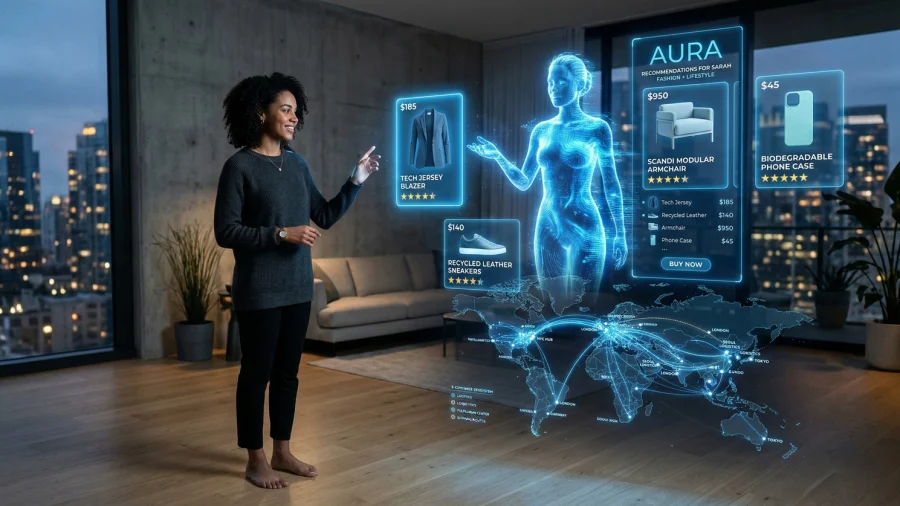
In an agent-first scenario, AI agents act as personal shopping assistants. Briefed on preferences,
budget, and purchase history, they can filter options, rank products, and even recommend a final choice with minimal
effort from the customer. Instead of browsing dozens of pages, a consumer might simply ask:
Example Prompt
“Find me the best formal shoes under $150 that match my past style choices.”
The implication is significant: decision-making shifts from humans to algorithms. If an AI assistant
recommends a product, many users will simply accept the suggestion — which makes “being discoverable” in AI systems
a new form of competitive advantage.
Why This Is a Major Disruption for Brands
Balchandani noted this transition could be “a big disruption for brands,” and potentially
existential for multi-brand aggregators or platforms that rely on human-led browsing. If AI agents
narrow choices automatically, the role of traditional browsing marketplaces could shrink as consumer journeys
become shorter and more automated.
The Rise of Generative Engine Optimisation (GEO)
For years, marketers focused on SEO. Now a new discipline is emerging:
Generative Engine Optimisation (GEO). Instead of optimising for search rankings, brands must ensure
their products, content, and data are represented well inside AI assistants that generate answers and
recommendations.
Practically, GEO means investing in:
- Structured product data (clear attributes like size, colour, material, fit, use-case)
- Machine-readable content (FAQs, specs, policies, reviews, guides)
- Consistent brand information across platforms and ecosystems
- APIs and integrations that allow assistants to access availability and pricing
Why Challenger Brands May Benefit
Research discussed in the webinar indicates that some larger brands may be less well represented on AI assistants,
while disruptive challenger brands appear more prominently. One reason is that AI systems tend to prioritise clear,
richly described products and fresh digital signals — areas where newer brands often invest aggressively.
In other words, AI may level the playing field: strong data + strong content can outperform legacy
reputation inside algorithmic recommendation environments.
Agentic Search Is Already Driving Growth
Brands and retailers experimenting with agentic search on their own websites are “absolutely seeing
a lot of customer growth in agentic search traffic,” Balchandani noted. Instead of forcing users to navigate menus,
agentic search allows customers to ask natural questions and receive curated results instantly.
Agentic Search Examples
- “Show me the best premium black tea under ৳500.”
- “Compare two gift bundles for Ramadan.”
- “Recommend a summer outfit based on my past purchases.”
APIs Will Become the Backbone of AI Commerce
As AI assistants become shopping intermediaries, API connectivity becomes essential. If an assistant
cannot access product data, availability, pricing, delivery timelines, or return policies, it cannot confidently
recommend that brand.
Companies will need to ensure their APIs connect with AI assistants and expand digital content across ecosystems —
from web platforms to marketplaces, social commerce environments, and emerging AI-native shopping experiences.
The Emergence of AI-Assisted Checkout
Early developments in AI-assisted checkout point to an even more automated future:
- The assistant identifies the best product
- Confirms the purchase with the user
- Completes payment and checkout
- Tracks delivery and sends updates
This creates a frictionless purchase journey — and forces brands to decide what role they want to play as new
ecosystems take shape.
What Brands Should Do Next
To remain visible in an AI-mediated market, brands should begin preparing now:
- Upgrade product data with complete, accurate attributes and rich descriptions.
- Publish helpful content (guides, comparisons, FAQs) that AI assistants can cite.
- Standardise identity signals (brand name, official links, policies, and media kits).
- Build API readiness for catalog, inventory, pricing, checkout, and support.
- Experiment with agentic search on your own site to capture early growth.
The shift from search engines to AI assistants may become one of the biggest transformations in digital commerce
since the rise of e-commerce itself. Brands that adapt early can gain visibility and advantage in a world where
discovery is increasingly algorithmic — and where being “recommended” matters more than being “ranked.”
.jm-article{max-width:920px;margin:0 auto;font-family:Arial,Helvetica,sans-serif;line-height:1.75;color:#111}
.jm-hero{padding:8px 0 10px;border-bottom:1px solid #e9e9e9}
.jm-kicker{margin:0 0 8px;font-size:13px;letter-spacing:.08em;text-transform:uppercase;color:#666}
.jm-hero h1{margin:0 0 10px;font-size:36px;line-height:1.2}
.jm-subtitle{margin:0 0 10px;font-size:18px;color:#333}
.jm-meta{font-size:13px;color:#666;display:flex;flex-wrap:wrap;gap:8px;align-items:center}
.jm-dot{opacity:.7}
.jm-figure{margin:16px 0}
.jm-figure img{width:100%;height:auto;border-radius:12px;display:block}
.jm-figure figcaption{margin-top:8px;font-size:13px;color:#666}
.jm-content h2{margin:22px 0 8px;font-size:24px;line-height:1.3}
.jm-content p{margin:12px 0}
.jm-content ul,.jm-content ol{margin:10px 0 10px 22px}
.jm-quote{margin:18px 0;padding:14px 16px;border-left:4px solid #111;background:#fafafa;border-radius:10px}
.jm-quote cite{display:block;margin-top:8px;font-size:13px;color:#555;font-style:normal}
.jm-callout{margin:16px 0;padding:14px 16px;background:#f6f7ff;border:1px solid #e7e8ff;border-radius:12px}
.jm-callout-title{margin:0 0 6px;font-weight:700}
.jm-callout-text{margin:0}
.jm-callout-list{margin:8px 0 0 18px}
.jm-divider{border:0;border-top:1px solid #e9e9e9;margin:18px 0}
.jm-footer{margin-top:18px;padding-top:14px;border-top:1px solid #e9e9e9}
.jm-tags a{color:#111;text-decoration:none;border-bottom:1px solid #ddd}
.jm-tags a:hover{border-bottom-color:#111}
@media (max-width:600px){
.jm-hero h1{font-size:28px}
.jm-subtitle{font-size:16px}
}